
A Russian university student in Jinan, Shandong Province, has reached a settlement with a local resident after injuring them in an electric bicycle accident, following a dispute over compensation that raised concerns about whether the foreign student might leave China without paying.

The accident occurred in June 2026, when the student, then a fourth-year undergraduate in Jinan, collided with the plaintiff while improperly overtaking on an electric bicycle. Traffic police determined that the student was entirely at fault. However, the two parties failed to agree on the amount of compensation, prompting the injured party to take the case to court.
After receiving the court’s notice that the case had been filed, the plaintiff contacted the presiding judge, Wang Fudong, expressing concern that the Russian student might return home before fulfilling his compensation obligations.
The plaintiff said they were particularly worried about being left without compensation for the injury and any subsequent treatment. They insisted that they should not have to bear the consequences of the accident without receiving proper compensation.
The judge promptly contacted the student, who had a basic understanding of everyday Chinese, and arranged for him to attend court with someone who could help translate.
The following day, the student arrived at the court with his Russian wife. He appeared nervous and explained that the couple had recently married and were living on a limited budget. His parents in Russia were also not financially well-off. He was worried that the injured party might demand an excessive amount of compensation, leaving him feeling guilty about the financial burden on his family.
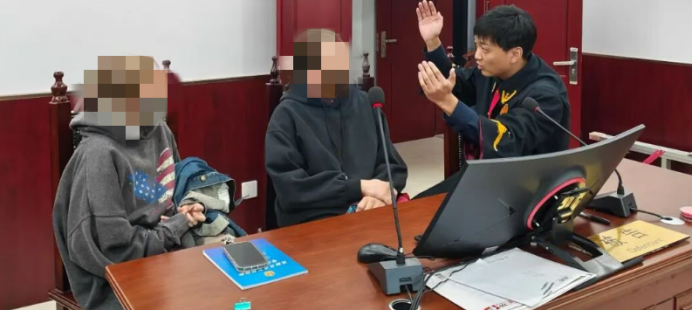
Court mediation in Jinan. Image source: Yanshan Court.
During the discussions, the student also raised questions about the compensation items listed in the court’s road traffic accident guidance booklet. In particular, he could not understand why he was required to pay both a hospital meal allowance and nutrition expenses after already covering the medical bills. He questioned whether the two items amounted to charging twice for food.
The judge explained that the two types of compensation served different purposes: the hospital meal allowance covered the injured person’s basic meals during hospitalization, while nutrition expenses covered additional nutritional support to aid recovery. He illustrated the distinction by comparing the latter to buying extra chicken legs to help someone recover from an injury.
After the student understood the compensation requirements and expressed his willingness to address the matter, the court invited the injured party to further discussions.
Having learned about the young couple’s financial circumstances and the student’s willingness to take responsibility, the plaintiff became more understanding.
The plaintiff acknowledged that the main concern had initially been that the foreign student might leave China without paying compensation. However, seeing his sincere attitude changed that perception.
The injured party agreed to a settlement under which the compensation could be paid in installments. In an additional gesture, the plaintiff offered to introduce the student to companies involved in cross-border trade through personal connections, potentially helping him find employment and earn money to repay the compensation.
After an afternoon of mediation, the two parties finally reached a settlement, resolving the dispute without further litigation.
No comments:
Post a Comment