
The highly anticipated annual Double 11 shopping carnival is here again! This year, it’s the 18th 双十一 (shuāng shíyī / Double 11) since it first came out.
Many of you might have heard of it already or even have been participating in it, but I still would like to share with you some interesting stories behind it to help you know better about its development. In this post, let’s have a closer look at 双十一!
The Origin of 双十一
双十一 is originally a festival called Bachelor’s Day, also known as The Singles’ Day (光棍节 Guānggùn Jié). On this day, many people on the Internet will play jokes, whining about a lack of romance in their life.
The date, November 11th (11/11), was chosen because the numeral “1” resembles a bare stick (光棍 guānggùn), which is Chinese Internet slang for an unmarried man who does not add “branches” to the family “tree”.
There are many versions about who invented 光棍节. The widely recognized one is that it was born on the campus of Nanjing University in the 1990s. The four boys who were chatting in the dorm joking about that “11.11 should be 光棍节!” may have never thought that it would become so popular today!
A Humble Start of 双十一 in 2009
With all the Internet revelry, 光棍节 gradually became an opportunity for business.
In 2009, Chinese e-commerce giant Alibaba (the parent company of Tmall, Taobao, AliExpress, etc.) created a shopping festival named “Double 11” with the reason to celebrate 光棍节. Alibaba promoted the festival with the slogan: Even if you don’t have a boyfriend or girlfriend, you can at least shop like crazy!
By emphasizing that singles who are often shamed over their status should treat themselves on this special day, Alibaba created a kind of party feeling for this festival.
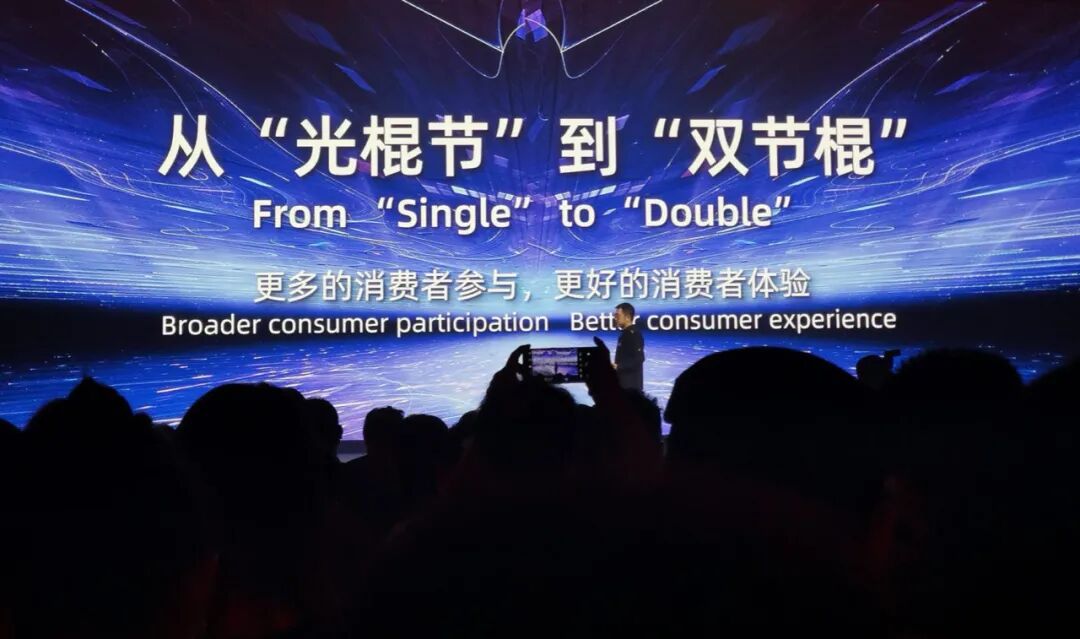
Now in its 18th year, this hyped-up shopping festival has grown into the most important online shopping festival in China, attracting more and more companies and brands around the world to participate, even overshadowing Black Friday.
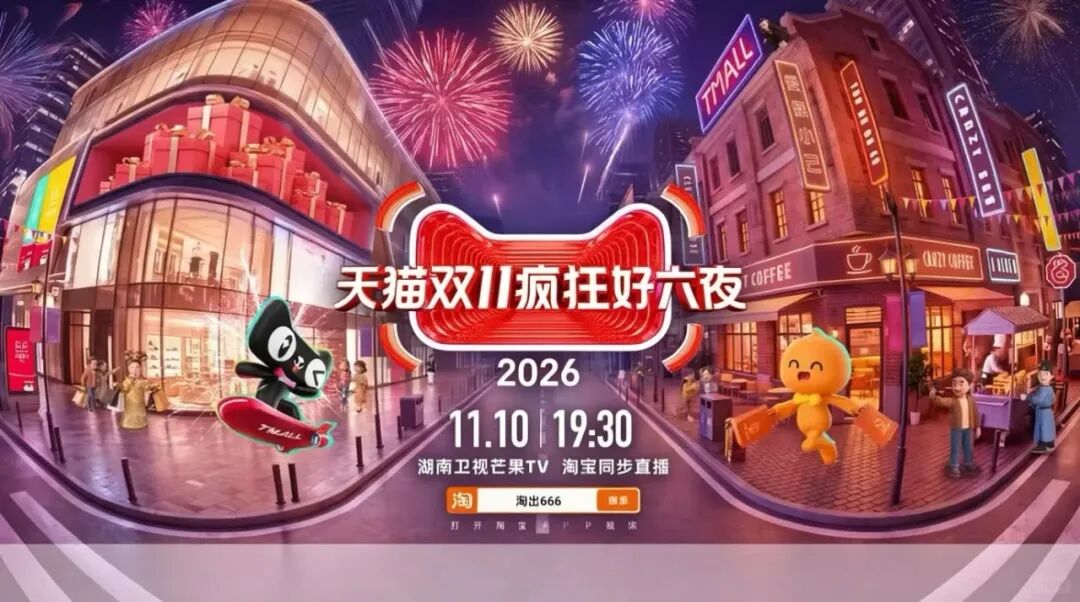
A yearly 11.11 shopping festival-themed TV gala.
A Huge Success in 2025
China’s biggest shopping festival has once again demonstrated the scale and resilience of its digital economy. During the 2025 Double 11 shopping festival (October 7 – November 11), total online GMV reached RMB 1.695 trillion, marking a 14.2% year-on-year increase.
Traditional e-commerce platforms continued to dominate, generating RMB 1.619 trillion in sales, with Tmall, JD.com, and Douyin ranking among the top performers. Meanwhile, instant retail emerged as a major growth driver, reaching RMB 67 billion, an impressive 138.4% year-on-year increase.
Beyond sales figures, the 2025 festival highlighted two major industry shifts: the rapid expansion of instant retail and the growing integration of AI technology. From AI-powered shopping assistants and virtual try-ons to faster, on-demand delivery, platforms are transforming the shopping experience and redefining how consumers discover and purchase products.
As competition moves beyond discounts and traffic acquisition, Double 11 is evolving into a broader contest of technology, consumer experience, and retail innovation — reflecting the continued transformation and growing sophistication of China’s digital commerce landscape.
Data source: Syntun 2025 Double 11 Shopping Festival Report
Related Internet Buzzwords
Due to the popularity of 双十一, a new internet vocabulary related to it has emerged. Here I just list 3 of them to show you an example:
剁手 [duò shǒu]: chop hands off
People who are obsessed with online shopping and always regret buying. They joke that they need to chop off their hands to stop buying.
E.g.: 今天我买了很多东西,我要剁手了。
Jīntiān wǒ mǎi le hěn duō dōngxi, wǒ yào duòshǒu le.
I bought a lot of things today, and I need to cut my hands off.
吃土 [chī tǔ]: eat dirt, be broke
If you spend all the money on shopping and have no money for food, there is only dirt left to eat for free.
E.g.: 这个月没钱了,我只能吃土。
Zhè gè yuè méi qián le, wǒ zhǐ néng chītǔ.
I don’t have money left this month, so I have to eat dirt.
种草 [zhòng cǎo]: plant grass
Recommend a product and attract people to like it too.
E.g.: 我今天种草了朋友的一双鞋!
Wǒ jīntiān zhòngcǎo le péngyou de yì shuāng xié!
I like a pair of shoes that my friend recommended to me today!
A Shopping Spree or a Strategy Session?
For the 2026 edition of Double 11, it’s less of a wild bargain dash and more of a planned mission — thanks to earlier starts, simplified rules, and massive cross-platform integrations.
The full process now looks like this:
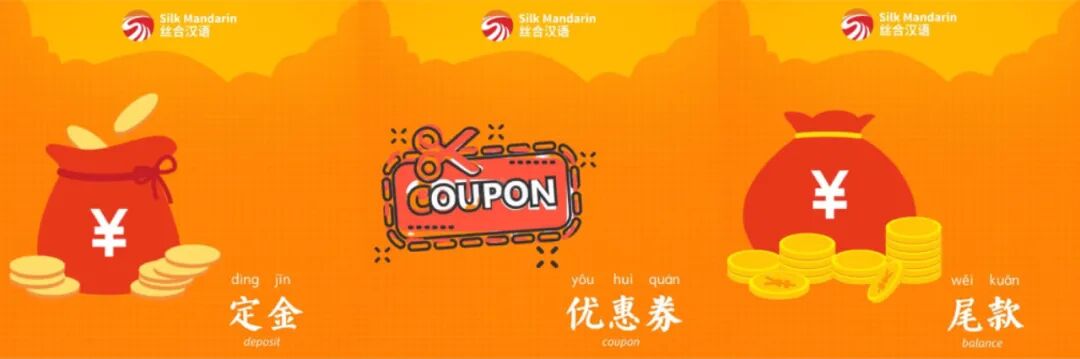
1) Deposit payment (定金 dìngjīn)
The campaigns kick off early. For example, many platforms opened pre-sales as early as mid-October, giving shoppers plenty of time.
2) Coupon & red packet grab (优惠券 yōuhuìquàn / 红包 hóngbāo)
These are more central than ever. Platforms offer “red-packet rain”, energy-accumulation tasks, search-code bonuses, and more.
3) Balance payment (尾款 wěikuǎn)
Then you pay the remainder, often during designated “golden hour” windows (e.g., evening 20:00). Pricing is more transparent: many items show official immediate discounts and platform-wide 10% off coupons.
What’s new and noteworthy in 2026:
1) Simpler discounts, less complicated shopping: Major platforms are moving away from complicated cross-store discounts and deposit-based pre-sales. Instead, direct price cuts (“official direct discounts” and “single-item discounts”) are becoming the main promotion methods. On JD.com and Douyin, shoppers can increasingly enjoy discounts on in-stock products without waiting for a final payment.
2) AI is becoming part of the shopping experience: From AI-powered shopping assistants and virtual try-ons to personalized product recommendations, AI is changing how people discover and choose products. More interestingly, AI-related products and services, including AI laptops and computing credits, have become new shopping categories this year.
3) From product discounts to quality and service-driven consumption: Double 11 is no longer just about buying things at lower prices. Platforms are expanding into lifestyle services such as housekeeping, home maintenance, and pet care, while putting more emphasis on new product launches, product quality, and customer experience.
So, what does this mean for shoppers? Double 11 is becoming less about mastering complicated discount formulas and more about finding the right products, services, and deals. While each platform still has its own schedule and promotional rules, understanding the basics will help you shop smarter and make the most of the shopping festival.
Happy shopping this Double 11!
No comments:
Post a Comment