
A bowl of plain noodles, completely free. Just walk in and help yourself.
Recently, two “zero-yuan noodle shops” in Nanjing made headlines one after another, drawing widespread attention online.
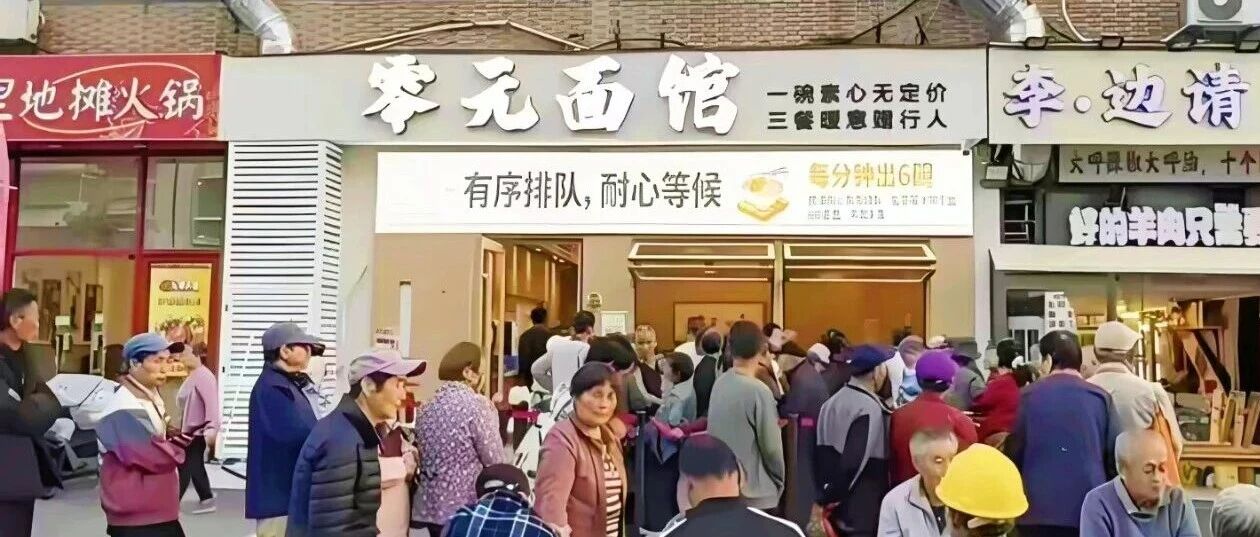
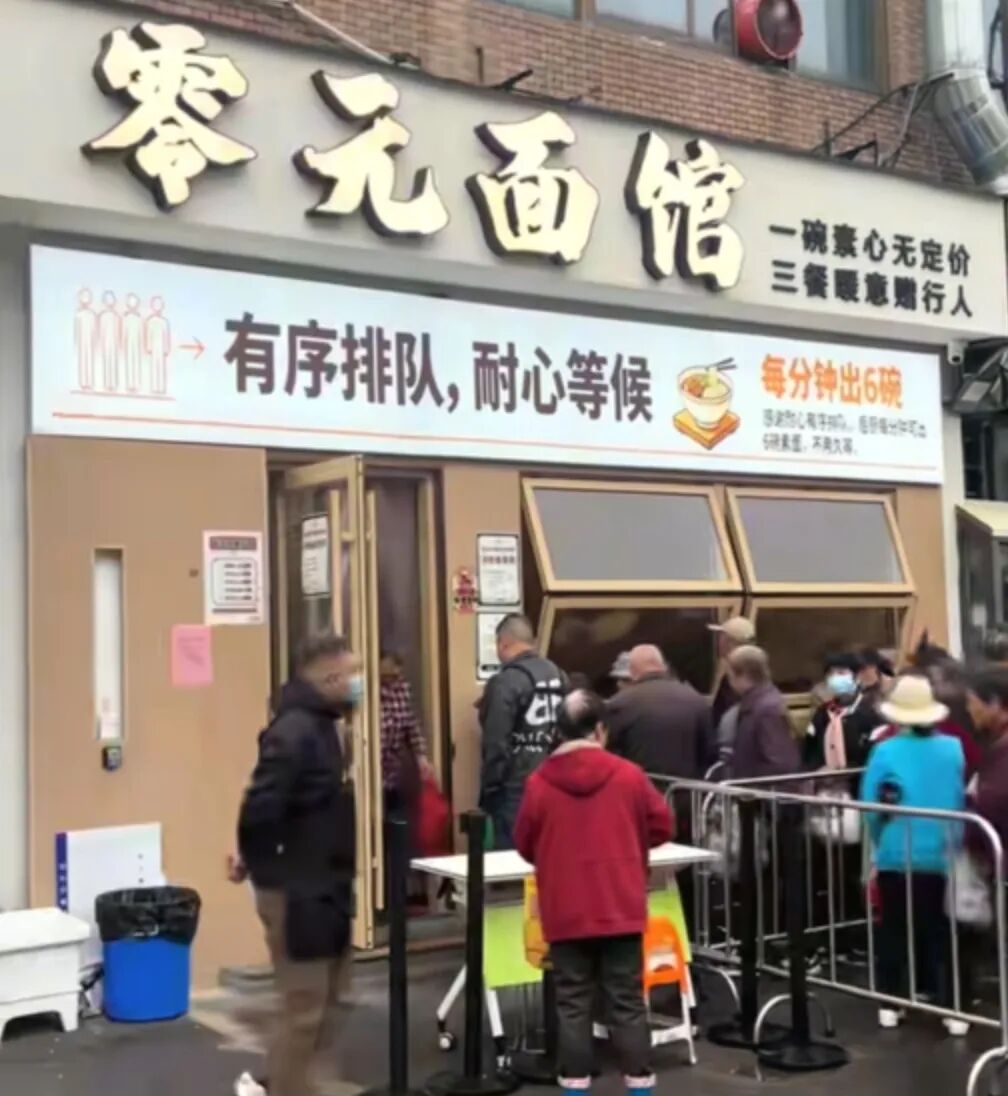
The “zero-yuan noodle shop” in Nanjing. Image source: Douyin account “公民说”.
The owner, surnamed Zhang, has opened two such shops in the city. The first opened on October 8, 2026, in Yinxiang, Jiangning District; the second followed later that month in Daishan, Yuhuatai District. There are no eligibility checks or registration requirements. The shops serve only plain noodles, with a limit of one bowl per person. Customers need to bring their own bowls and chopsticks, and the shops are closed on Tuesdays.
Together, the two locations give away more than 3,000 bowls a day — roughly 80,000 bowls a month.
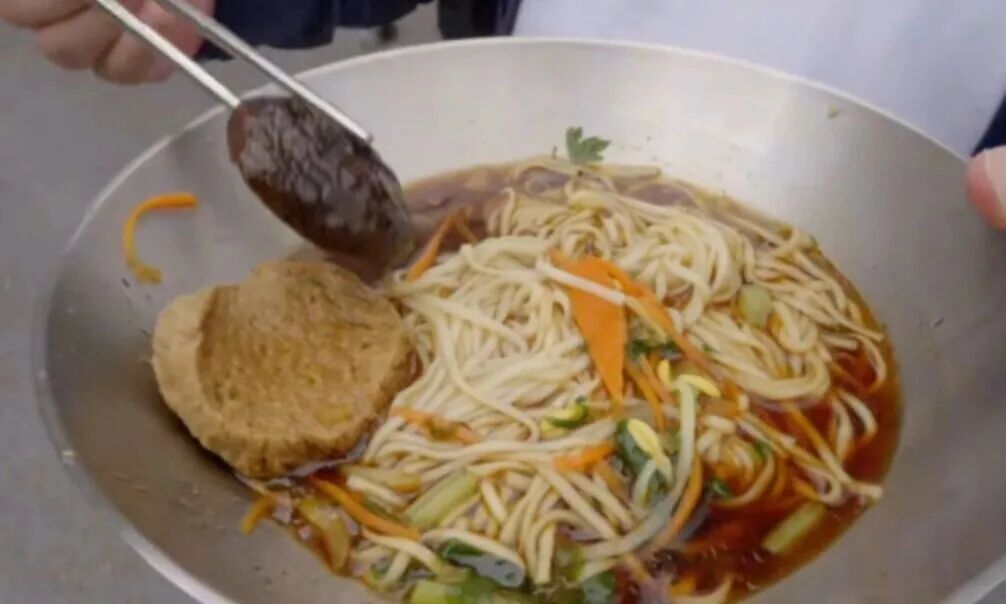
Free plain noodles served at the “zero-yuan noodle shop.” Image source: Douyin account “王老虎下馆子”.
Zhang says his intention was simply to do something charitable. He wanted to make sure elderly residents, sanitation workers and food delivery riders could all enjoy a hot meal. He personally covers all the costs, including ingredients, rent and staff wages. His goal is to serve 5,000 bowls a day, and he has said the shops will never charge.
But not everyone in the neighborhood sees it the same way.
Yang, who runs a fried noodle shop next door, says his restaurant is now almost empty during lunchtime. Customers are flocking to the neighboring shop for free noodles, often lining up outside.
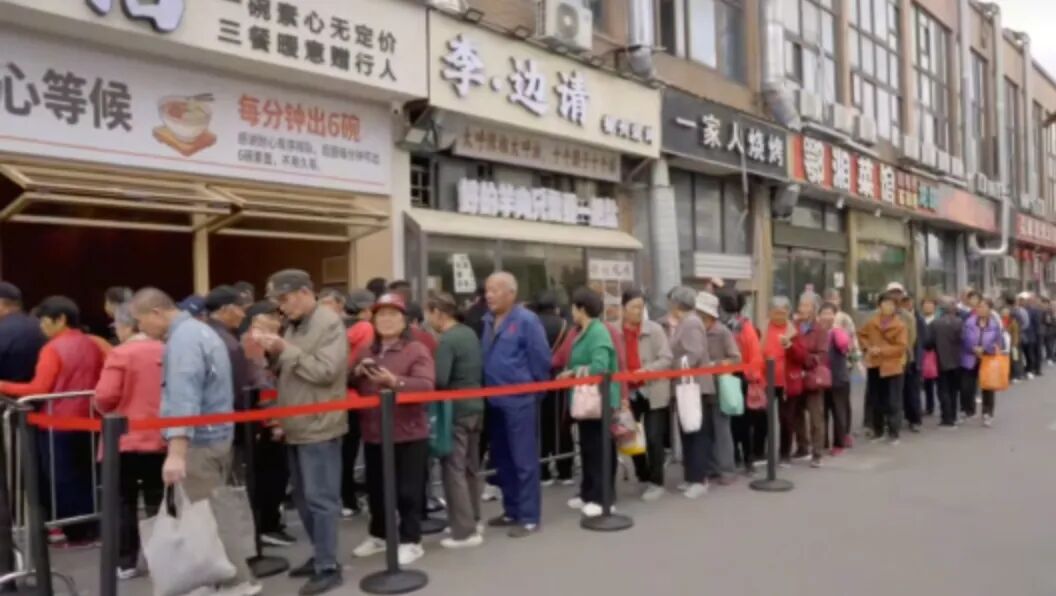
A long queue forms outside the “zero-yuan noodle shop.” Image source: Douyin account “王老虎下馆子”.
Yang’s business has always operated on thin margins. After deducting rent, utilities and ingredient costs, he makes just over one yuan in profit on each serving. He has relied on high sales volumes to support his family for the past 15 years. Now, with customer numbers falling sharply, he is already wondering whether to renew his lease when it expires.
Other noodle shop owners nearby have reported similar losses. Some say their daily revenue used to reach more than 10,000 yuan (around $1,400), but has dropped by around 2,000 yuan (around $280) a day since the free noodle shop opened.
Others, whose businesses are farther away, say the impact has been limited because their customers have different preferences, and not everyone wants plain noodles.
An act of kindness has therefore become a very real business challenge for some neighboring shop owners.
There are other concerns, too. With no eligibility requirements, the free food may attract people simply looking to save money, rather than those genuinely in need.
And with long queues forming outside every day, the people the initiative was originally meant to help — such as elderly people living alone and those currently out of work — may not necessarily be the ones benefiting most.
So how can charitable efforts be balanced with the interests of other businesses? It is a question worth considering.
A Lanzhou beef noodle restaurant in Nanjing’s Jianye District offers a different approach. It also provides free meals to people going through difficult times, but uses a discreet arrangement between the restaurant and those in need. Customers simply have to say, “I’d like a traditional beef noodle soup,” to receive a free meal.
This simple code helps identify those who genuinely need assistance while also keeping the number of free meals manageable.
Zhang’s decision to fund the initiative entirely out of his own pocket, without setting any conditions, is certainly admirable. But if he hopes to keep the shops running over the long term, there may be something worth learning from this alternative approach.
No comments:
Post a Comment