
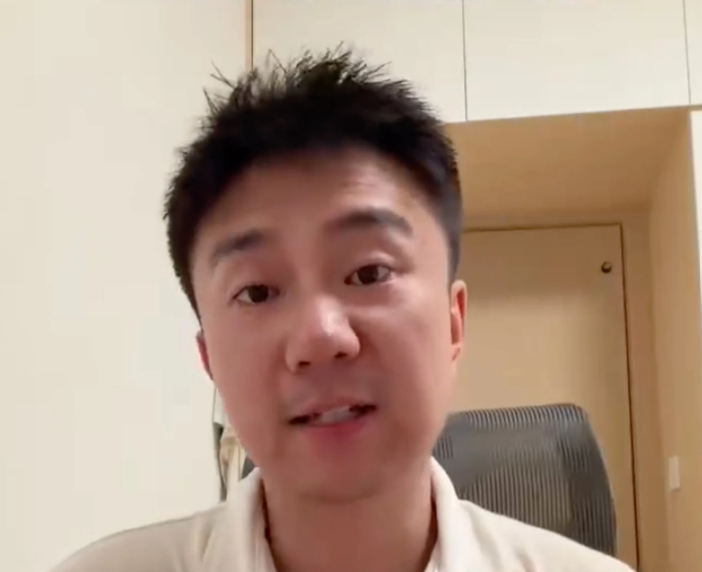
A young Chinese investor has attracted widespread attention after leaving his demanding career at just 30 years old, supported by rental income from 14 affordable apartments. But his experience has also revealed the challenges of depending on property investments for financial freedom.
For many young professionals, retirement is something they expect to consider in their sixties. But for Fan Junjie, a Chinese man originally from Jilin province, the possibility of escaping full-time employment became a reality decades earlier.

From Long Working Hours to Financial Independence
Before becoming a property investor, Fan worked in internet healthcare sales, where his working days could stretch to 18 hours.
Although his career provided employment and income, the demanding schedule left him searching for greater personal freedom. Rather than continuing to depend entirely on his salary, he began looking for investments capable of providing regular income.
His opportunity came from an unexpected corner of China's property market: small, ageing apartments in Changsha, the capital of Hunan province.
He began studying property opportunities in Changsha and discovered that older apartments in established urban neighbourhoods were considerably cheaper than homes in China's largest cities. While newer residential developments often attract buyers looking for modern facilities and potential appreciation, Fan concentrated on properties that could produce rental income at relatively low purchase prices.
Beginning in 2023, he gradually expanded his investments, acquiring 14 apartments over approximately two years. His total investment eventually exceeded 2 million yuan, equivalent to roughly US$300,000.
How 14 Apartments Generate His Income
Fan's investment approach focused on inexpensive residential units in locations where rental accommodation remained attractive.
Many of his purchases belonged to a category of older Chinese housing commonly known as laopoxiao. These properties are generally small, have ageing infrastructure and may lack the modern conveniences found in newer developments. Despite their limitations, such apartments can appeal to tenants who prioritise convenient locations and affordable monthly rents.
Fan concentrated much of his portfolio near Xiangya Hospital, where the surrounding neighbourhood provides potential demand from people seeking accommodation.
Of his 14 apartments, 11 are currently rented out. Together, these properties generate an estimated 210,000 yuan annually, approximately US$31,500.
His least expensive apartment was purchased for around 150,000 yuan and produces monthly rent of 1,700 yuan. At the other end of his portfolio, his most expensive property cost close to 310,000 yuan after accounting for purchase-related expenses and improvements. That apartment generates approximately 2,200 yuan in monthly rent.
To simplify maintenance, Fan adopted similar renovation standards across several properties and kept commonly required replacement parts available. This approach helped him manage multiple homes without treating every repair as an entirely new problem.
Early Retirement Was Not Entirely Stress-Free
By the age of 30, Fan had reached a financial position that allowed him to leave conventional employment. His achievement reflects the growing interest in financial independence, a concept that encourages people to build sufficient investment income to cover their living expenses without relying on a regular job.
However, owning rental properties does not automatically mean receiving income without effort. As Fan expanded his portfolio, he encountered the practical responsibilities of being a landlord. Older apartments require maintenance, tenants may leave unexpectedly, and finding replacements can take time. Property transactions also involve expenses such as taxes and agency fees.
An apartment might appear highly profitable when comparing its purchase price with monthly rent, but the actual return becomes smaller after operating expenses are considered.
China's changing property market presented an additional concern. Declining property values could reduce the market worth of his apartments, even if the properties continued producing rental income.
The experience encouraged Fan to reconsider whether purchasing additional apartments remained the most effective way to build wealth.
Why He Is Moving Towards Dividend Investments
On October 26, 2026, Fan publicly indicated that he would stop expanding his property holdings. Instead, he began considering a greater allocation towards dividend-focused investment funds and shares in companies that distribute part of their profits to investors.
His reasoning centres on the relationship between income, flexibility and the amount of work required to manage an investment. Rental properties may deliver monthly payments, but converting a property into cash can require a lengthy sales process. Shares and investment funds, by comparison, are generally easier to sell, although their market values can fluctuate significantly.
Dividend investments also eliminate many responsibilities associated with physical rental properties, including arranging repairs, finding tenants and overseeing renovations.
Nevertheless, dividends are not guaranteed. Companies can reduce or suspend payments, while changes in financial markets can cause investors to lose capital. For Fan, the attraction is not necessarily higher returns but the possibility of maintaining investment income with greater flexibility.
Managing Savings and Investment Risks
Fan has also adopted a diversified approach to managing his finances. He reportedly keeps emergency savings in Yu'ebao, a money-market investment product available through Alipay. Money that he expects to need within the following one to three years is allocated to relatively conservative investments, including bond funds and bank wealth-management products.
This structure helps distinguish money intended for near-term living expenses from capital invested for longer-term returns. Financial diversification is particularly important for early retirees because their investment portfolios may need to support living expenses for several decades. A decline in rental income, unexpected repairs or a prolonged stock-market downturn could otherwise create significant financial pressure.
His Story Sparks Discussion Across China
Fan's unusual retirement journey has attracted enormous attention on Chinese social media, with reports indicating that the story has received more than 200 million views.
His experience has resonated with younger people who are questioning whether traditional employment should remain their primary source of financial security. There is also increasing interest in dividend-based investing among younger Chinese investors. According to figures reported by Ant Fortune, people born after 1995 represented nearly 40% of dividend index fund users during the first half of 2026.
For some young professionals, building recurring investment income represents a potential way to reduce dependence on stressful employment. Others remain cautious, pointing out that financial independence requires substantial savings, careful planning and a willingness to accept investment risks.
A Different Lifestyle at Just 30
Having stepped away from his previous career, Fan is now spending time living and travelling in Laos. His circumstances are very different from those of someone whose daily routine revolves around long office hours.
Yet his experience demonstrates that financial independence is not simply about accumulating enough assets to stop working. The choice of investments, their ongoing costs, liquidity and long-term reliability all matter. While Fan initially found success through affordable real estate, he is now exploring ways to make his finances more flexible and less demanding to manage.
Importantly, he has acknowledged that his personal investment strategy may not be appropriate for everyone.
The Bigger Lesson
Fan's story illustrates both the opportunities and limitations of building wealth through rental property. Purchasing inexpensive apartments in suitable locations can generate meaningful cash flow, particularly when acquisition costs remain low compared with rental demand. However, high rental income does not necessarily translate into equally high profits. Maintenance, taxes, vacant properties and declining asset values can substantially affect an investor's financial position.
At the same time, replacing property income with dividends introduces different risks rather than eliminating risk entirely. For people considering early retirement, the broader lesson is that financial freedom depends on more than owning multiple properties or receiving regular payments. It requires an investment strategy capable of supporting everyday expenses, adapting to changing economic conditions and protecting against unexpected financial setbacks.
Fan's experience shows that achieving early retirement is one challenge. Maintaining that independence over the long term is another.
No comments:
Post a Comment